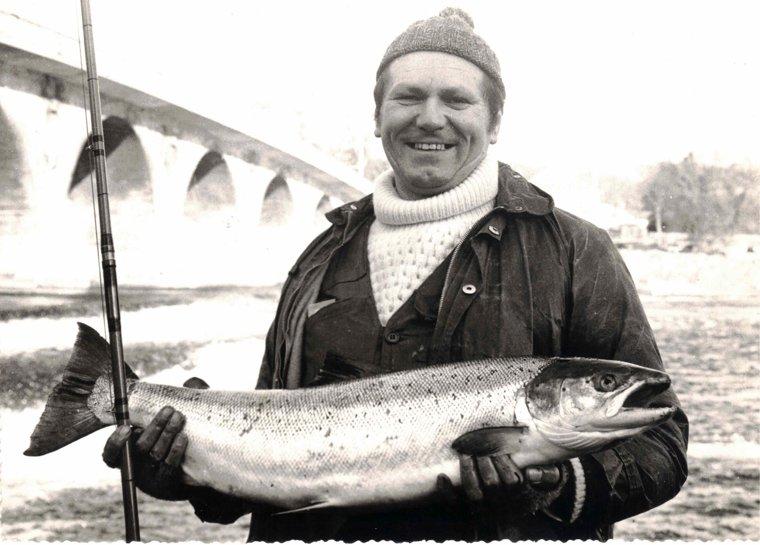
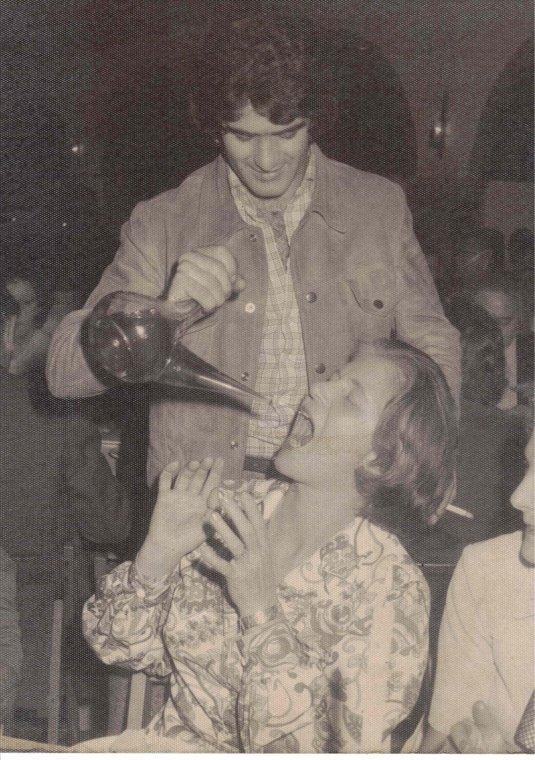
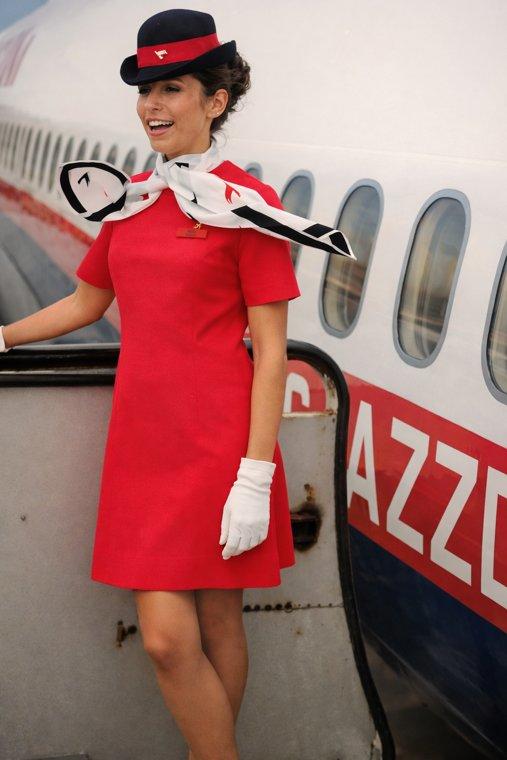
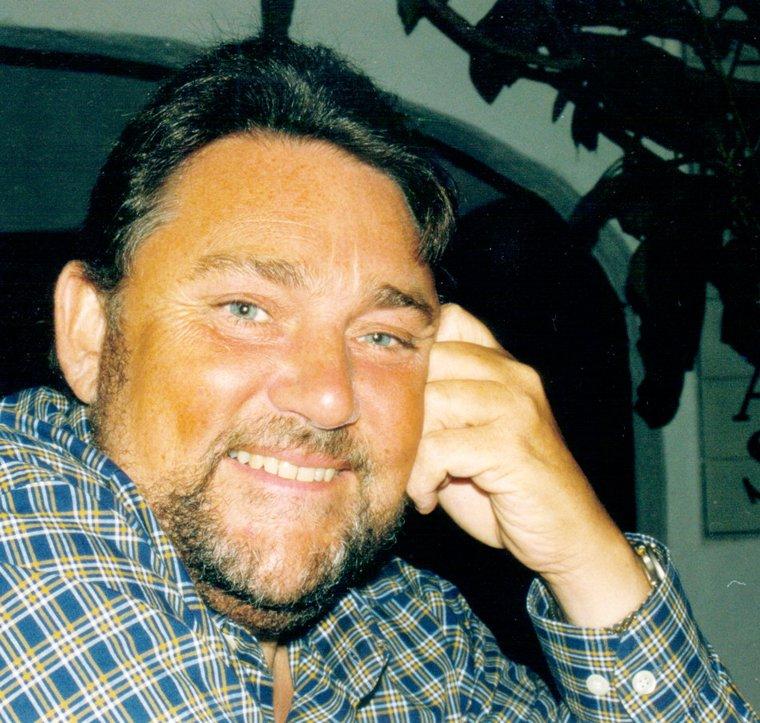
For Henry Lockett, the archive begins with four familiar faces. Here are his parents and maternal grandparents, in family photographs and in the words he uses to remember them.
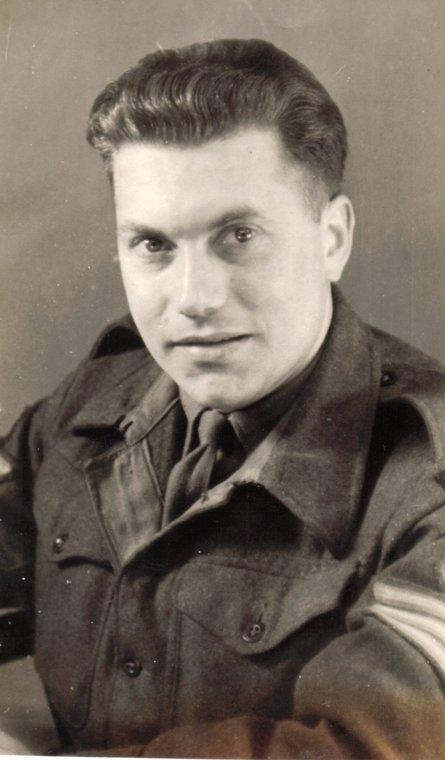
Harry served in the RAF and later worked as a policeman in Northumberland. Henry remembers a tall, slim man with a quick wit. “Harry was the kindest soul I’ve ever met, and one of the wittiest. Everyone loved my granda.”
Mary and Harry raised Chris and Margaret. When Henry pictures his nana at home, she’s making turnip soup. She loved babies and children, and he remembers how she greeted him: “She loved me a lot and she would light up when I was with her.”
Born Christine Mary Brown, Chris trained as a nurse in Newcastle. She went on to see the world as an air stewardess before returning to nursing. Henry remembers her ENT work and later health visiting. In his words, “My mum was beautiful and loving.”
At eighteen Stuart left Bristol to study metallurgy at Imperial College London. Henry remembers him playing cello in the London Philharmonic Orchestra and going on to a long career at Alcan. At home, he was the dad who “always encouraged me to do whatever I wanted.”
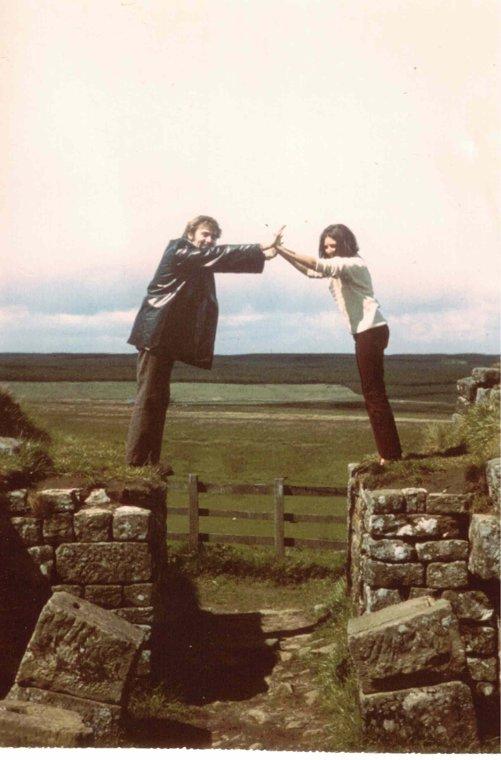
Chris grew up with David McDonald. Their fathers worked together in the police, and the two families were close. At David’s wedding in Hexham, Chris met Stuart. Henry remembers exactly where one photograph fits into their story: the next day, they were at Hadrian’s Wall, reaching across a gap to touch hands.
That November, Chris and Stuart married in Acomb. David became Henry’s godfather. On Stuart’s side were Isabel Carslaw and Frank Lockett, the Glasgow and Bristol branch of the family.
Chris and Stuart at Hadrian’s Wall, the day after David’s wedding. From Henry’s family album.
Earlier generations
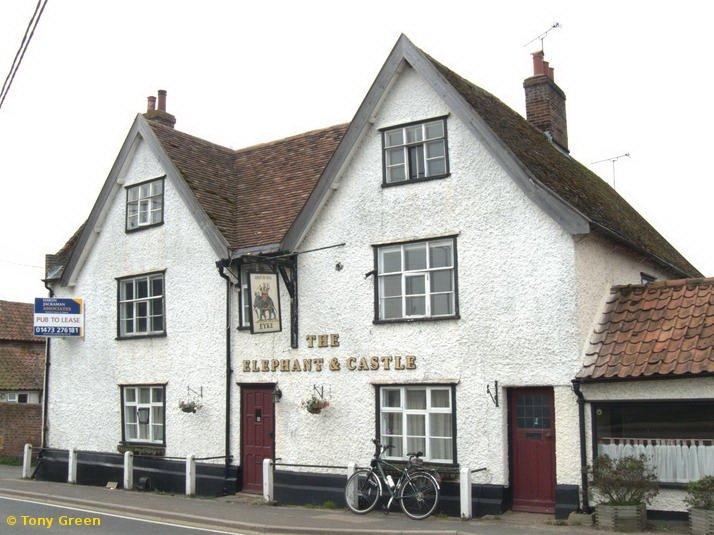
The Elephant and Castle in Eyke, photographed in 2010. A bicycle rests beneath the inn’s sign.
Suffolk · 1778–1828
Forty-five years at the Elephant and Castle
Mary Cousins and Simon Blaxall married at St Mary Quay in Ipswich in May 1778. Their son Simon and daughter Esther were born in Rushmere. Another son, Frederick, was born in Eyke, where both his parents had been born.
When Mary died in 1828, a notice in the Bury and Norwich Post devoted a line to the village inn. It named Simon as her husband and recalled forty-five years of keeping the Elephant and Castle. Almost two centuries later, a family photograph shows the inn’s name still painted above the doors.
Mary and Simon’s marriage record in Christree, the family transcription of Mary’s death notice in the Bury and Norwich Post of 5 March 1828, and the dated photograph of the inn.
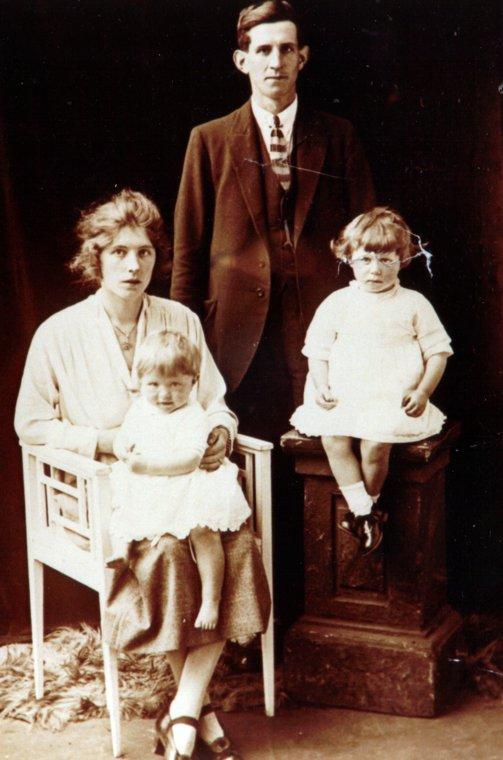
Tom and Margaret Dinwiddie with two children in a family portrait labelled Carlisle, 1923.
Cumberland · 1899–1923
A foster father at the wedding
In the 1911 census, eleven-year-old Thomas Dinwiddie appears below John and Alexander Keddie on a household form. Beside his name someone wrote “nurse child”, a term the family tree helps explain. William and Margaret Keddie had fostered Tom from infancy.
Ten years later, William Keddie’s name appears in Tom’s life again. When Tom married Margaret Scott at Cotehill in July 1921, William was a witness. The other witness was Hannah Scott, Margaret’s twin sister.
The Keddie household’s 1911 census schedule, RG14/31251, schedule 48, and the foster-family and marriage-witness entries in Tom’s profile.
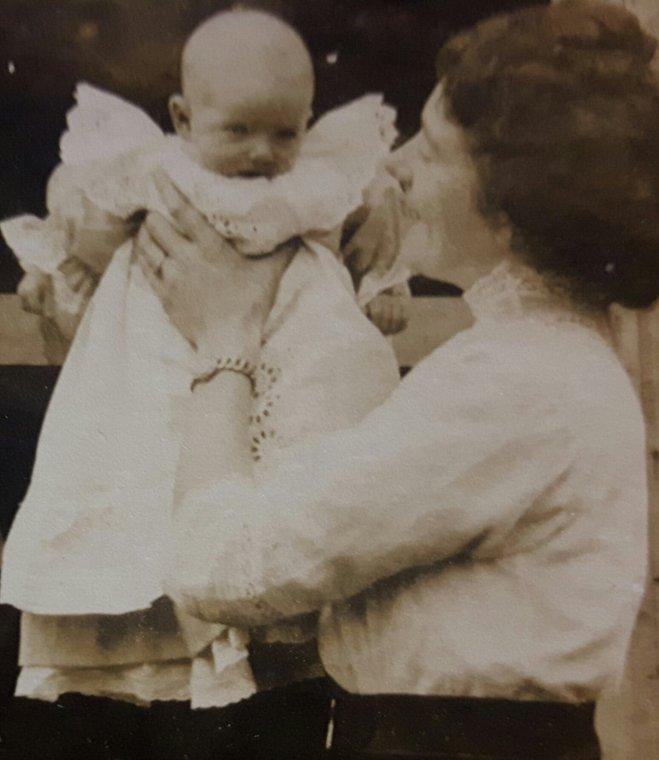
Jennie Howe with her aunt Sally. The family caption places this photograph in Saskatchewan in 1912.
Carlisle to Canada · 1911–1921
A postcard from Saskatchewan
In April 1911, Elizabeth Roe left Liverpool aboard the SS Corsican, bound for Quebec. She had grown up in Belle Vue, Carlisle. By the 1916 census she was living in Saskatoon with her husband, John William Howe.
A photograph in the archive shows their daughter Jennie in a long white dress, held up by her aunt Sally, John’s sister. In the 1921 Canadian census, Jennie appears in the Howe household with her brothers Joseph, Harry and Robert. Sally, recorded in the tree as Sarah, was living farther west in Redcliff, Alberta.
Elizabeth Roe’s voyage entry, the 1916 and 1921 Canadian census entries, and the family captions for Jennie’s photograph and the Howe family postcard.
Francis Lockett in uniform, in an undated portrait preserved with his family record.
Wolverhampton, Glasgow and Bristol · 1877–1966
The coachman’s son became a colour printer
William Major Lockett was born in Wolverhampton in 1877. The family’s 1911 census notes put him in Dalton-in-Furness, working as a coachman. Six years later, his army papers still gave coachman as his trade. Other family records preserve a second job, tending an electric motor at the city waterworks.
His son Francis, born in 1917, worked as a colour printer. During the Second World War he served in Italy with the Royal Electrical and Mechanical Engineers. In October 1945 he married Isabella Carslaw in Glasgow, and Francis was still living in the city in 1947.
By the time their son Stuart was born in February 1948, Frank and Isabel had a home on Ilchester Crescent in Bristol. Their grandson Henry remembers Isabel working for Imperial Tobacco and Frank working for a Bristol printing firm.
Henry recalls that his dad, Stuart, could hardly wait to leave Bristol. At eighteen he went to London to study metallurgy at Imperial College. Henry also remembers another part of his dad’s life in London: he played the cello in the London Philharmonic Orchestra.
William’s 1911 census and 1917 occupation entries, his surviving army attestation, and the service, occupation and Glasgow marriage entries in Francis’s profile. Henry Lockett’s recollections of his grandparents and father, and Stuart’s GEDCOM university entry for 1966–1969.